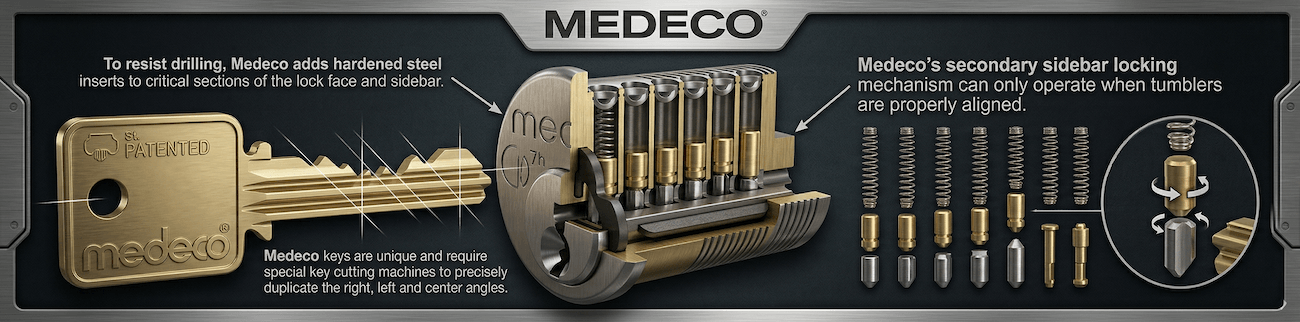
High-security locks are more than just a deterrent; they provide robust protection against forced entry, lock picking, and key duplication. For anyone looking to secure their home, business, or valuables, investing in a high-security locking system is a crucial step.
Here’s a breakdown of what makes a high-security lock, how they work, and the different types available.
What Makes a Lock "High-Security"?
Not all locks are created equal. A high-security lock is distinguished from a standard lock by specific features designed to resist attacks. The key differentiators include:
1. Patented Key Control
This is perhaps the most significant feature of a high-security lock.
- What it is: The key design is patented, meaning the blanks (un-cut keys) are not available to the public. Only an authorized locksmith or the original owner with proper documentation can order duplicate keys.
- Why it matters: It eliminates unauthorized key duplication. If you lend someone your key, they cannot go to a hardware store and get a copy made.
2. Resistance to Surreptitious Attacks
High-security locks are designed to resist methods of entry that don't leave damage, such as picking, bumping, or decoding.
- Lock Picking: Special pins and mechanisms (like sidebar technology) are used to make picking extremely difficult.
- Lock Bumping: Bumping uses a special "bump key" to force the pins to the shear line. High-security locks use mechanisms that render this technique ineffective.
3. Physical Strength and Durability
These locks are built to withstand forced entry.
- Materials: They are made of hardened steel alloys and heavy brass components.
- Hardened Steel Inserts: Key locations (like the face of the cylinder and the area around the screws) are reinforced with hardened steel to resist drilling.
- Stronger Components: The deadbolts, cylinders, and housings are thicker and more robust than standard hardware.
Key Technology in High-Security Locks
How do these locks achieve this enhanced security? It’s all about the engineering.
Axial and Radial Pin Tumbler Systems
Standard locks use a single row of pins. High-security locks often use multiple rows of pins (axial and radial) that must align perfectly for the lock to open. This exponentially increases the difficulty of picking the lock.
Sidelines and Interlocking Mechanisms
Many high-security locks (like those from Assa Abloy or Medeco) feature a "sidebar" mechanism. This is a separate locking bar that must be aligned by a precise groove (a "sideline") milled into the side of the key. Even if the main pins are successfully picked, the sidebar will still hold the lock closed.
Key Geometry and Sliders
Some modern locks, particularly in European markets, use a flat-sided key with a complex, wavy groove milled into its surface. Sliders inside the lock trace this groove. This system is virtually impossible to pick with traditional tools.
Types of High-Security Locks
1. High-Security Deadbolts
The foundation of residential and commercial security. Look for Grade 1 ANSI (American National Standards Institute) deadbolts, which represent the highest level of residential security.
- Applications: Main entry doors, utility rooms, and perimeter security.
2. Interlocking Deadbolts (Rim Locks)
These locks mount on the surface of the door, and the bolt interlocks with a special strike plate on the door frame.
- Why it’s secure: When the door is pried, the lock and strike plate pull together, resisting the force. It’s almost impossible to pry open a door with a properly installed interlocking deadbolt.
3. Heavy-Duty Padlocks
Not your hardware store padlock. High-security padlocks are massive, often made of hardened steel, and use the same pick-resistant cylinders found in deadbolts.
- Applications: Securing gates, trailers, sheds, and commercial equipment.
4. Smart/Electronic High-Security Locks
These blend high-security mechanical components with smart technology.
- Benefits: You get the strength of a high-security lock body combined with the convenience of keyless entry, unique codes, and audit trails. The digital keys are often encrypted, providing high levels of virtual security.
Key Brands in the Industry
Several companies specialize in high-security locking solutions. When shopping, you’ll frequently see these names:
- Medeco (USA): Well-known for its unique angled key cuts and sidebar technology.
- Assa Abloy (Global): The largest lock manufacturer in the world, owning many high-security brands like Yale, Abloy, and Mul-T-Lock.
- Mul-T-Lock (Israel/Global): Famous for its "telescoping pins" and the interactive mobile key system.
- Schlage (USA): Offers a high-security line (Primus) in addition to its residential products.
Conclusion
A high-security lock is a critical investment for anyone serious about physical security. While the initial cost is higher than a standard lock, the benefits—patented key control, pick and drill resistance, and superior materials—provide peace of mind and significantly lower the risk of unauthorized entry. Consult a professional locksmith to determine the best high-security system for your specific needs.
0 Responses to "High Security Locks"